
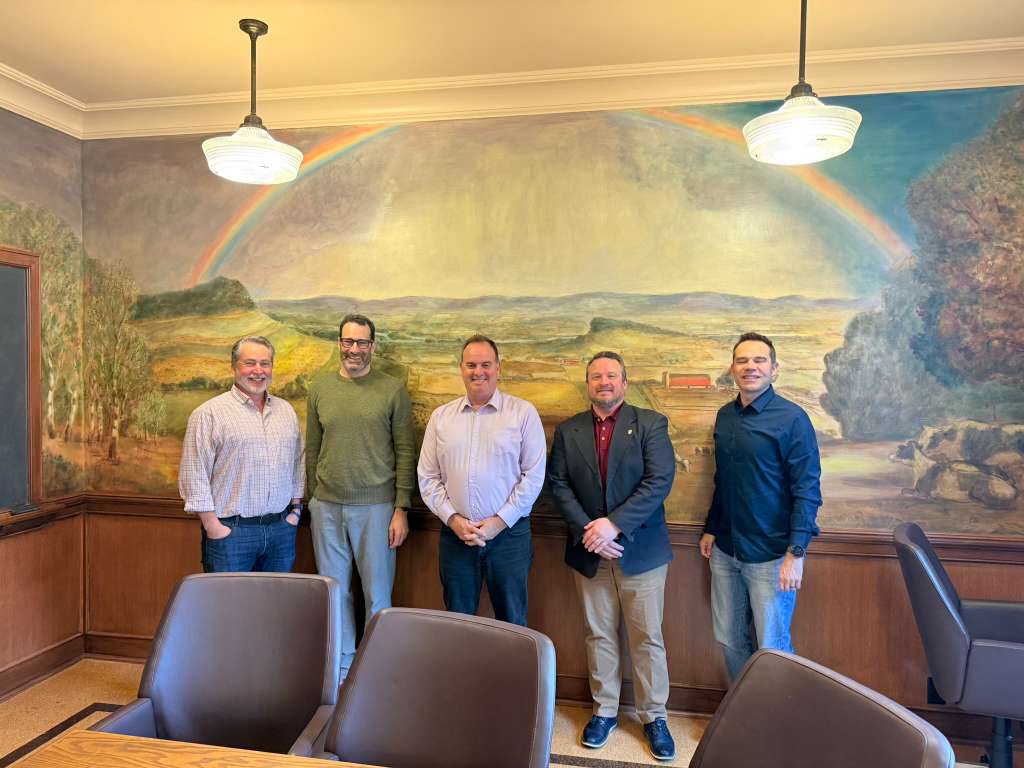
LaunchLab builds global partnerships to accelerate innovation and entrepreneurship
From Madison to Dallas, Stellenbosch University’s (SU) LaunchLab strengthened international partnerships that could unlock new opportunities for entrepreneurs, researchers, and spinout companies.
As innovation becomes increasingly global, strong international partnerships are essential for translating research into real-world impact. During a recent visit to the United States, Brandon Paschal, Head of SU LaunchLab and Deputy Director of Spinout Companies and Funds at SU met with leading universities, technology transfer organisations, investors, and venture builders to strengthen existing collaborations and explore new opportunities for South African innovation.
The engagements took place in Madison, Wisconsin, and Dallas, Texas and where focused on expanding collaboration in entrepreneurship, commercialisation, venture creation, and investment.
A major focus of the visit was the continued development of SU’s relationship with the University of Wisconsin–Madison (UW). Over the past three years, the two institutions have collaborated on several innovation initiatives, particularly in health biotechnology through the Centre for Epidemic Response and Innovation (CERI). The visit provided an opportunity to deepen these ties and advance discussions towards a broader institutional Memorandum of Understanding (MOU).
Meetings with university leadership explored how entrepreneurship can be embedded across teaching, research, and innovation. UW’s ambition to become the “Number One Public University in the United States for Founders” resonated strongly with the LaunchLab team, highlighting a shared commitment to building entrepreneurial universities.
Discussions also explored innovative approaches to entrepreneurship education, including campus-wide entrepreneurship curricula that extend beyond business schools, founder storytelling initiatives that inspire future entrepreneurs, and opportunities to expand international internship programmes that could one day include placements within SU spinout companies.
The delegation met with several UW researchers whose technologies complement innovations emerging from the University.
These discussions focused on understanding existing technology portfolios, exploring potential collaboration opportunities, and identifying where intellectual property developed at UW could support the growth of SU spinout companies. Researchers were introduced to several South African ventures through a series of elevator pitches, creating opportunities for future collaboration and technology exchange.
The visit also included broader discussions around university partnerships, where both institutions reflected on successful collaborations to date and considered how a formal partnership could support future joint initiatives in innovation and entrepreneurship.
The delegation also met with the Wisconsin Alumni Research Foundation (WARF), widely regarded as one of the world’s leading university technology transfer organisations.
Conversations focused on opportunities to collaborate on the Alginate project while exploring additional technologies within WARF’s portfolio that could potentially be licensed to South African ventures. The discussions extended to investment opportunities, including how international technologies could support SU spinout companies and the practical considerations involved in investing across jurisdictions.
Sharing experiences around attracting private investment into university spinouts also provided valuable insights for strengthening South Africa’s innovation ecosystem.
At the College of Agriculture and Life Sciences (CALS) Department Heads Forum, department leaders showcased emerging research across their respective disciplines.
LaunchLab presented several SU ventures that could complement this work, while discussions explored how collaborative research and commercialisation could help translate innovations into practical solutions for African markets—creating new opportunities for economic development, job creation, and sustainable agriculture.
The second leg of the visit took the delegation to Dallas, Texas, where meetings shifted towards investment, venture creation, and scaling innovation.
Engagements with Corus Wealth, a network of family offices, focused on the realities and opportunities of investing in Africa. The LaunchLab team showcased several agritech and greentech ventures, alongside successful SU spinouts including CubeSpace and Immobazyme, demonstrating the growing maturity of the university’s commercialisation pipeline.
Meetings with 52 Africa, managers of a fund investing in African Series A companies, explored the significant funding gap that exists at the seed and pre-seed stages of innovation. Discussions highlighted the importance of early-stage capital in enabling university technologies to reach investment readiness, with the fund expressing interest in exploring appetite among its limited partners for earlier-stage investment opportunities.
Additional conversations with 310 Capital and Wave Ventures focused on South African innovation opportunities and the unique characteristics of investing in university-developed technologies. Both organisations expressed strong interest in several companies within the SU portfolio and recognised the quality of ventures emerging from the ecosystem.
LaunchLab also visited Brazos Innovation Partners (BIP), an outsourced venture studio that works with multiple universities to build companies from academic research.
BIP shared insights into its venture-building model and the evolution of its Technology Transfer Studio. Over a 12-month period, the organisation reviewed 198 university technologies, ultimately creating several commercial ventures through licensing mature technologies to industry and creating companies.
These discussions offered valuable perspectives on scaling venture creation, strengthening commercialisation processes, and accelerating the pathway from university research to successful businesses.
The visit reinforced the value of international partnerships in strengthening the University’s innovation ecosystem.
From expanding entrepreneurship education and developing collaborative research projects to engaging global investors and learning from leading venture builders, the engagements demonstrated how international collaboration can create new opportunities for South African researchers, entrepreneurs, and spinout companies.
As LaunchLab continues to build relationships with global partners, these collaborations will play an increasingly important role in accelerating the commercialisation of research, attracting investment, and ensuring that university innovations deliver meaningful impact both locally and internationally.
Related Posts
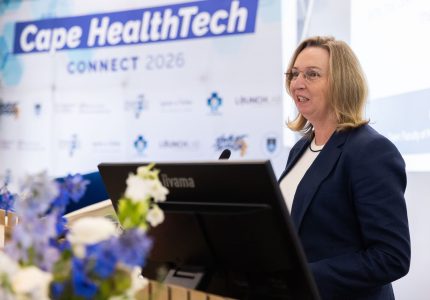
Cape HealthTech Connect 2026 puts collaboration at the heart of health innovation
Cape HealthTech Connect 2026 brought researchers, clinicians, entrepreneurs, investors, funders and industry leaders together on 17 September 2026 at the Biomedical Research Institute, Tygerberg, to explore a central challenge facing health innovation in Africa: how do promising ideas move from…
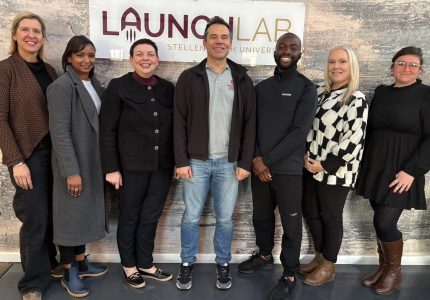
SU LaunchLab expands its team to strengthen innovation and entrepreneurship
SU LaunchLab is pleased to welcome three new team members, further strengthening its ability to support entrepreneurs, innovators, and the broader Stellenbosch ecosystem. Elijah Djan joined as an Incubation Programme Officer, where he will lead incubation programmes designed to support…
Building the next generation of student entrepreneurs at Stellenbosch University
Entrepreneurship has long been part of the Stellenbosch University (SU) story. From pioneering research and breakthrough technologies to student-led ventures tackling real-world challenges, the University has cultivated an environment where ideas can become meaningful impact. Recognising the need to create…