
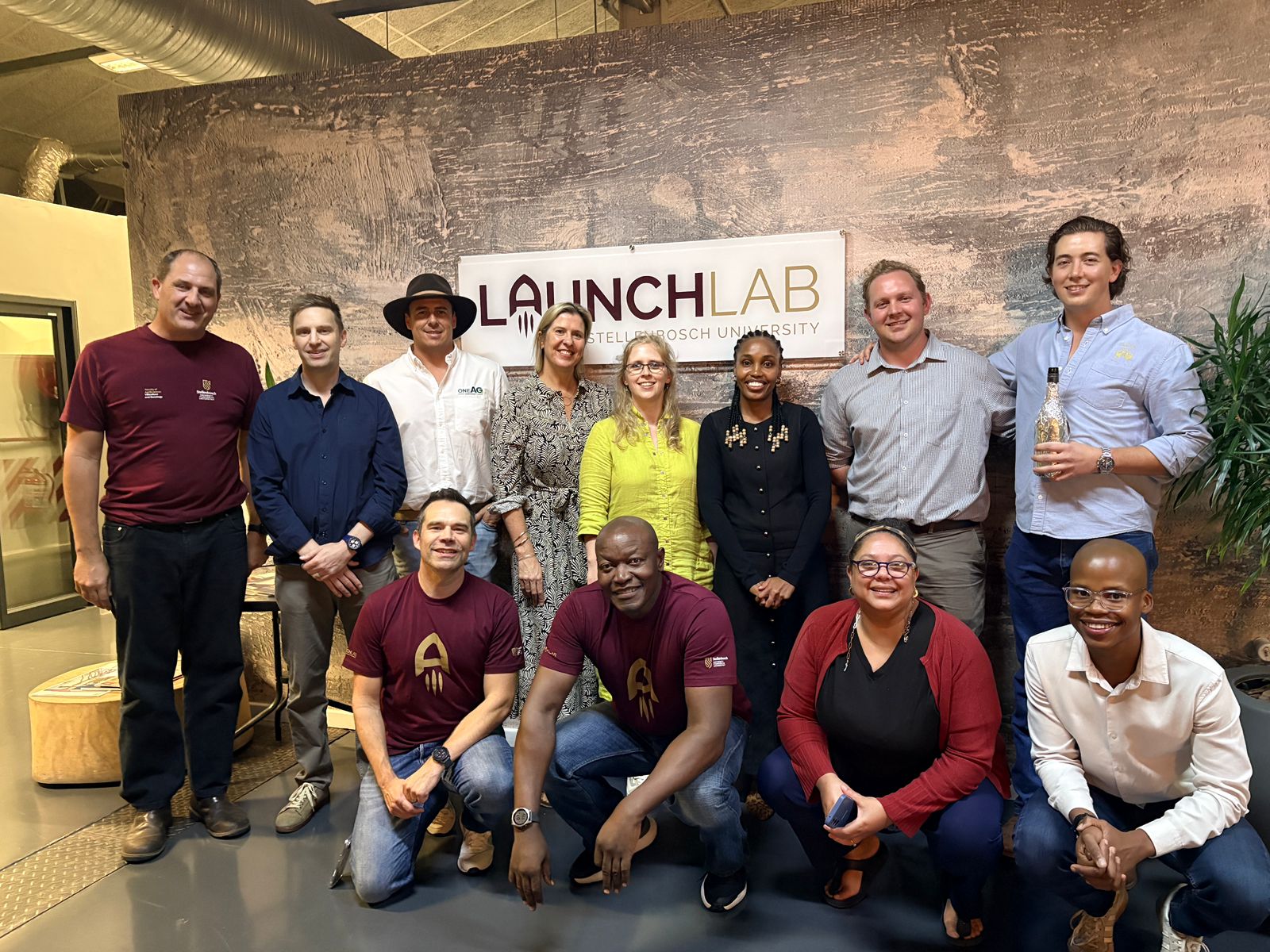
LaunchLab’s Countdown programme culminates in high-impact agritech Demo Day
Stellenbosch University (SU) LaunchLab hosted its agritech Countdown Demo Day at LaunchLab, on 26 March 2026, where promising Pan-African business ventures pitched in front of key ecosystem players, including potential customers and investors.
Over the past five weeks, the Countdown programme welcomed eight startup teams to help them determine if their business ideas are feasible, desirable, and have potential to reach the market. Following the successful completion of the Countdown Programme, the Demo Day, as the last phase of the programme, is intended to give these ventures a stage to pitch their innovations to investors and mentors.
“This programme is the first step into our LaunchLab ecosystem, where we manage a portfolio of 44 university companies across green, health, and agritech. Over the last 11 years, the companies we have worked with have received over R1 billion in investment, and they earned over R1.5 billion in revenue last year alone. Our focus on agritech is not just about supporting tech companies, it is about using technology to strengthen the Western Cape’s massive agricultural industry, and we are also looking to bring in external innovation, like a Kenyan company, to help build our economy,” said Brandon Paschal, Head of the SU LaunchLab and Deputy Director of Spin-outs and Funds.
This round’s startups featured innovative ideas in agritech, including livestock tracking, precision agriculture, plant science, food production sustainability, soil testing, and digital platforms for farmers and the wine industry.
The eight startups comprised:
- Tom Murray, from Soil BioTrac, which is advancing precision agriculture by enabling farmers to better understand and manage the critical soil zone influencing plant health and yield;
- Regina Kgatle, from Modisa, a livestock tracking solution, and built for low-data environments and rapid response, provides farmers with real-time, and enables prompt tracking, tactical response, and improved insurance positioning to protect valuable agricultural assets;
- Lekoro Leonard Kholise from Phytely combines plant science with applied solutions to help farmers optimise crop performance, while maintaining and protecting the ecosystems that sustain long-term agricultural productivity;
- Jessica de Stadler, Gugu Gama and Mhlengi Khumbule from GreenLoop enhance food production sustainability by cultivating halophytes in salinity-affected production environments, they improve soil and water resource quality while extracting crop protection compounds used in their biostimulant products;
- Palesa Motaung from Bread Africa is building inclusive, and sustainable food value chains through its Farm-In-A-Box platform. By turning daily farm discipline into a commercial asset, Bread Africa helps farmers prove food safety standards, bridge trust gaps, and unlock bankable growth opportunities;
- Jaco Theart from One Ag addresses the challenge of fragmented and unreliable agricultural information across Southern Africa. Through a consolidated digital platform, One Ag delivers validated agricultural information in farmers’ home languages;
- Priscilla Wakarera, from Rhea (Kenya) provides smallholder farmers with on-site soil testing within minutes, delivering precise fertiliser and crop recommendations through a commission-based agent network; and
- Pieter Brune from DigiTaste, which addresses the wine industry, collects data for the wine supplier and information on the wine to consumers. The data will enable the wine industry to improve its marketing and sales efforts, as DigiTaste will serve as the information bridge between wineries and consumers.
The programme is sponsored by the Western Cape Department of Economic Development and Tourism (DEDAT) and delivered in collaboration with the Stellenbosch Network, with a clear focus on advancing agritech innovation, and contributing to the growth of the Western Cape as a trillion-dollar economy by 2035, supporting and scaling local entrepreneurs.
“Our role is not to create jobs directly but to create the enabling environment for businesses to thrive. Our vision is for the Western Cape to become Africa’s tech capital and reach a trillion-dollar economy by 2035. Through our research, we recognised that ecosystem builders like LaunchLab are the critical glue that makes innovation hubs work. Therefore, we created a fund to provide longer-term support to organisations like this. We are currently supporting 15 ecosystem building initiatives across biotech, artificial intelligence, game development, and creative industries, and my interest is to network with anyone interested in our work around skills development and regulatory reform”, said Olivia Dyers, Director of Digital Leadership at DEDAT.
The programme’s focus also aligns with SU LaunchLab’s broader work through their role in the Zero Emissions Entrepreneurship for Universal Sustainability (ZEEUS) project, where LaunchLab is part of an international consortium. The partnership aims to grow opportunities and connect local innovation with broader African markets, enabling cross-border collaboration, knowledge sharing, and the exchange of ideas, particularly with the strong interest from programme participants in South Africa and the Western Cape’s markets.
Related Posts
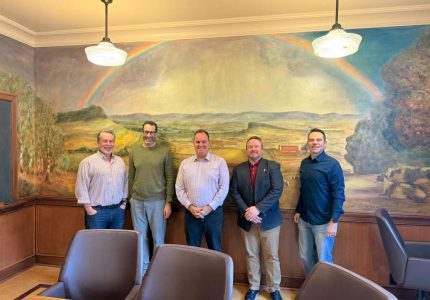
LaunchLab builds global partnerships to accelerate innovation and entrepreneurship
From Madison to Dallas, Stellenbosch University's (SU) LaunchLab strengthened international partnerships that could unlock new opportunities for entrepreneurs, researchers, and spinout companies. As innovation becomes increasingly global, strong international partnerships are essential for translating research into real-world impact. During a…
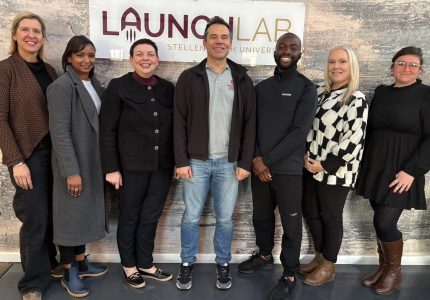
SU LaunchLab expands its team to strengthen innovation and entrepreneurship
SU LaunchLab is pleased to welcome three new team members, further strengthening its ability to support entrepreneurs, innovators, and the broader Stellenbosch ecosystem. Elijah Djan joined as an Incubation Programme Officer, where he will lead incubation programmes designed to support…
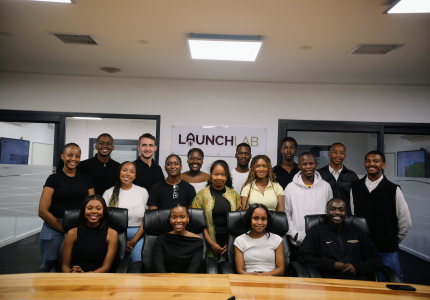
Building the next generation of student entrepreneurs at Stellenbosch University
Entrepreneurship has long been part of the Stellenbosch University (SU) story. From pioneering research and breakthrough technologies to student-led ventures tackling real-world challenges, the University has cultivated an environment where ideas can become meaningful impact. Recognising the need to create…